
Multi-Chain Wallets, Cross-Chain Swaps, and the Security Gaps Users Still Miss
A common misconception is that a multi-chain wallet makes decentralized finance simpler merely by putting several networks in one interface. It does make switching between networks less cumbersome, but it does not merge them into one system. Ethereum, Arbitrum, Base, Polygon, and other chains still have separate validators, applications, fee markets, bridge contracts, and failure modes. A wallet can organize those environments; it cannot erase the boundaries between them.
That distinction matters most when a user performs a cross-chain swap. What looks like one action in a polished interface may involve a source-chain transaction, a bridge or messaging mechanism, a liquidity provider, a destination-chain transaction, and several independent assumptions about token contracts. The practical security question is therefore not simply, “Is this wallet safe?” It is, “Which components are being trusted at each step, and what can the wallet actually verify?”
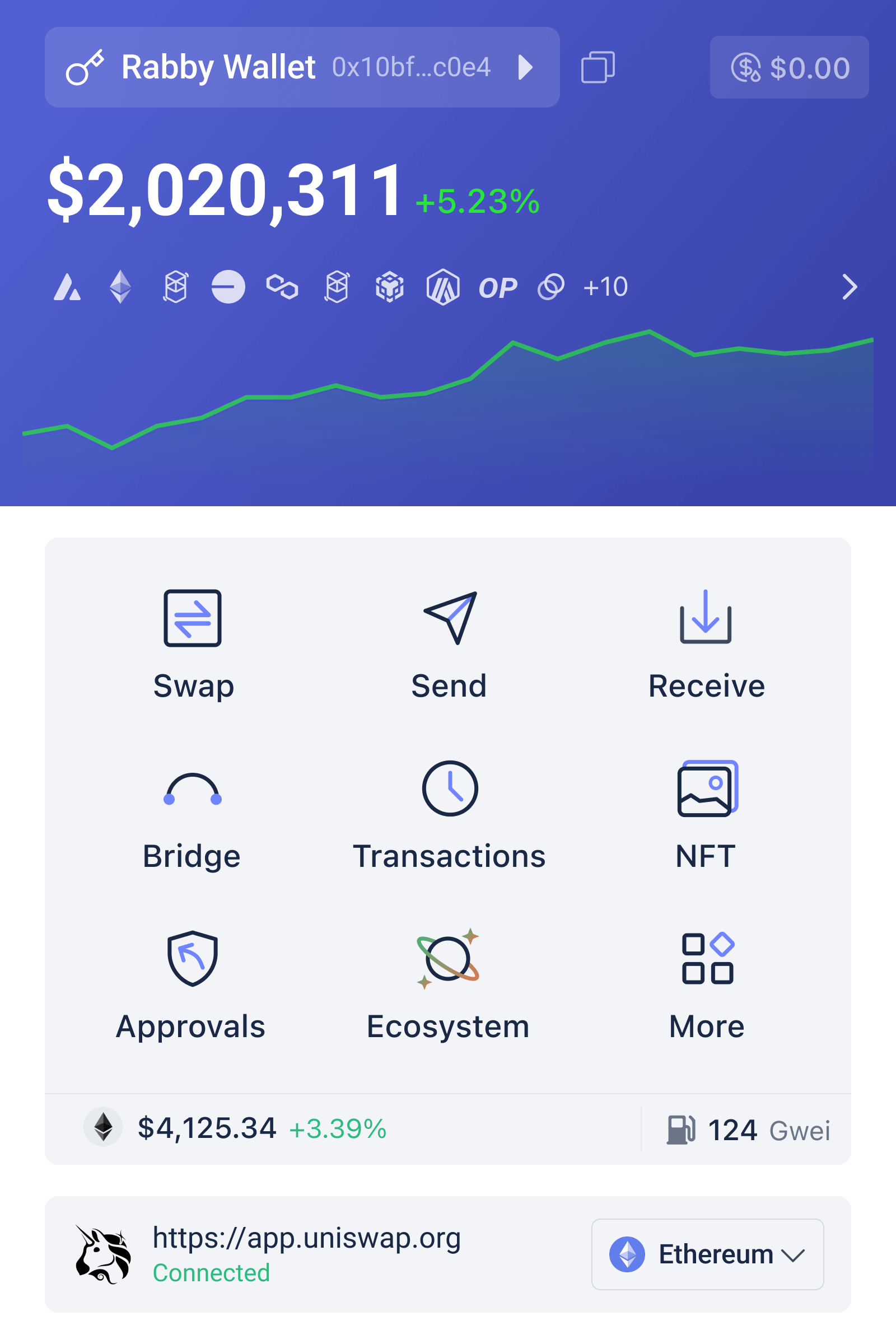
The wallet is an interpreter, not a security guarantee
A cryptocurrency wallet usually performs two jobs. First, it controls or helps authorize access to a private key. Second, it acts as an interface between the user and blockchain applications. The second job is easy to underestimate. A decentralized application may present a button labelled “Swap,” while the underlying transaction asks a smart contract to transfer tokens, grant spending permission, or execute a series of calls.
A wallet can decode transaction data, display the intended network, identify contract addresses, and in some cases provide simulations or warnings. Those functions improve the user’s ability to inspect a transaction before signing. They are valuable because blockchains generally execute exactly what is authorized, not what the user thought the button meant. Yet an interface cannot guarantee that every contract is honest, every simulation is complete, or every external data source is accurate.
This is the first important correction to the usual security narrative: transaction visibility is not the same as transaction safety. A warning may be a useful signal rather than proof of malicious behavior, and the absence of a warning is not proof that risk is absent. Detection systems depend on contract interpretation, available data, simulation assumptions, and the behavior of applications that may change after a transaction is signed.
For US users, the practical implication is straightforward. Treat a multi-chain wallet as a risk-reduction tool and signing surface, not as an insurance policy. Downloading and installing the rabby wallet extension should be followed by verifying the official source, checking the browser’s extension details, and creating or importing a wallet only in an environment where the recovery phrase cannot be observed by another person or application.
Why a cross-chain swap is not one swap
On a single network, a token swap commonly routes through an automated market maker or another decentralized exchange mechanism. An automated market maker uses liquidity pools and a pricing formula rather than a traditional order book. The user still faces slippage, fees, token-contract risk, and approval risk, but the assets and transaction state exist within one chain’s execution environment.
A cross-chain swap adds another layer: movement or representation of value between networks. There are several broad models. A bridge may lock an asset on one chain and mint a corresponding representation on another. A liquidity network may release destination-chain liquidity after observing a source-chain deposit. A messaging system may pass information between chains so that a destination contract can act. These designs differ materially in trust assumptions, settlement speed, liquidity, and what happens during an outage.
Consider a simplified example. A user wants to exchange an asset on Ethereum for a stablecoin on Base. The interface may first request approval for a contract to spend the source asset. It may then request a deposit or swap on Ethereum. A relayer, bridge, or liquidity provider may observe that event. Finally, a destination-chain contract may release or swap funds on Base. Each step can succeed, fail, or become delayed under different conditions. The user’s screen may show one coherent workflow, but the underlying system is a chain of dependencies.
This is why “the wallet supports both chains” does not mean “the wallet guarantees a safe bridge between them.” Wallet compatibility is mainly an interface and signing capability. Bridge security belongs to the bridge’s contracts, validators, relayers, oracle assumptions, upgrade controls, and operational procedures. A wallet may help reveal which contract is being called, but it does not inherit the bridge’s security model.
The risks that hide behind familiar buttons
Approvals can outlive the swap
Token approvals are permissions. When a user approves a contract to spend a token, the permission may remain active after the intended transaction is complete, sometimes for a much larger amount than the user realizes. That does not mean every approval is dangerous, but it creates a standing authorization that deserves review. A compromised or poorly designed contract may later use that allowance.
A cautious workflow distinguishes between approving a limited amount and approving an effectively unlimited amount. The first may create more friction because future transactions require new approvals. The second is more convenient but increases the potential loss if the approved contract is exploited or the user is tricked into interacting with the wrong address. Users who no longer need a permission can consider revoking it through a reputable tool, while remembering that revocation itself is a blockchain transaction with a network fee.
Slippage is an economic risk, not automatically a scam
Slippage is the difference between the expected execution price and the final price. It can arise from price movement, shallow liquidity, volatile markets, or a transaction becoming pending while other trades change pool balances. Excessively high slippage settings can allow an unfavorable execution, but setting slippage too tightly can cause a legitimate trade to fail.
The right setting depends on the asset, liquidity, trade size, and urgency. A wallet warning about price impact should not be dismissed simply because the user trusts the application. Price impact is often a property of the market’s available liquidity, not evidence that the wallet or exchange is broken. Conversely, a surprisingly large price impact is a reason to stop and investigate rather than click through quickly.
Bridges introduce concentrated failure points
Cross-chain infrastructure often concentrates value in contracts or operational systems that must coordinate events across networks. A bug, private-key compromise, faulty message validation, or governance failure can affect many users at once. The fact that a bridge has operated normally in the past is useful history, but it is not a proof that its assumptions remain sound under a new upgrade or unusual market stress.
There is also a subtle distinction between finality and confirmation. A source-chain transaction may be visible quickly, but the system may wait for additional confirmations before treating it as sufficiently difficult to reverse. Faster settlement can improve usability while increasing exposure to reorganization or message-verification assumptions. Slower settlement may reduce some timing risks but does not eliminate smart-contract or governance risk.
A reusable security framework for multi-chain users
Before signing, ask four questions: What asset am I authorizing? Which contract receives that authority? On which network will the transaction execute? What must happen afterward for the destination asset to arrive? This simple sequence separates the user’s goal from the mechanism used to achieve it.
Next, inspect the destination. A familiar token symbol is not enough because the same symbol can exist in multiple contracts, including malicious imitations. Check the network, contract address, amount, minimum received, and recipient. If the action involves a new or unfamiliar application, use a small test amount when the economics permit it. A test cannot prove safety, but it can expose an incorrect network, unsupported token, or workflow misunderstanding before the larger transaction.
Review the wallet’s simulation or warning panel, but interpret it as an analytical aid. A simulation can show expected balance changes under stated conditions; it may not model every later state change, off-chain decision, oracle update, or malicious behavior. A warning deserves attention even when the user believes the application is legitimate. An all-clear deserves less confidence than a verified understanding of the transaction.
Finally, separate operational security from protocol security. A strong password, a protected recovery phrase, and a clean browser reduce the chance of account compromise. They do not make a vulnerable bridge safe. Conversely, a well-designed protocol cannot protect funds if a user signs a deceptive approval after installing a counterfeit extension. Security is the product of both layers, and the weaker layer can dominate the outcome.
What to watch as cross-chain finance develops
The next phase of multi-chain DeFi will likely be judged less by how many networks an interface lists and more by how clearly it communicates dependencies. Conditional improvements would be meaningful: better transaction decoding, more reliable simulations, clearer approval controls, and warnings that explain the specific reason for concern rather than displaying a vague danger label.
Users should also watch whether cross-chain systems reduce trust concentration or merely move it. A design with many independent validators may distribute control, but the security depends on how those validators are selected, incentivized, and replaced. A system with a smaller operational group may be faster and easier to coordinate, yet more exposed to key compromise or governance capture. There is no universal “most decentralized” label that settles this comparison without examining the mechanism.
In the near term, the strongest user strategy is not to avoid every cross-chain transaction. It is to match transaction size and urgency to the quality of the system’s guarantees. For routine transfers, a well-understood route with transparent fees may be reasonable. For large or time-sensitive positions, users may prefer a slower process, independent verification of contract addresses, and a test transaction. The cost of caution is measurable; the cost of an irreversible mistake can be much larger.
FAQ: multi-chain wallet and cross-chain swap security
Does a multi-chain wallet hold my assets on every network?
Usually, the wallet controls keys that can authorize transactions on compatible networks; it does not necessarily hold assets in the traditional custodial sense. Assets remain recorded on their respective blockchains or in smart contracts. A token shown in the wallet may also be a bridged representation whose value depends on another protocol.
Is a cross-chain swap safer because it uses one wallet interface?
No. One interface can reduce confusion and make transaction review easier, but it does not remove the risks of bridges, liquidity providers, approvals, smart contracts, or incorrect token addresses. Review the underlying route and permissions rather than judging safety from visual simplicity.
Should I reject every wallet warning?
No. Warnings can be imperfect, but they are signals that deserve investigation. Read what the warning identifies, compare the contract and expected balance changes with your intent, and stop when the result cannot be explained. A warning is not automatically proof of fraud, and no warning is not proof of safety.
What is the most useful habit before signing?
Translate the button into permissions and outcomes: which contract is called, what can it spend, what asset should leave, what asset should arrive, and on which network. That mental translation catches many errors that a fast click through a familiar interface will miss.
The central lesson is easy to state but often ignored: a multi-chain wallet can make complex systems legible, while cross-chain swaps make those systems more interdependent. The safest user is not the person who trusts every warning or fears every contract. It is the person who understands what the wallet can show, what the protocol must guarantee, and where uncertainty still remains.